
 Mary Abbazia
 Tom Spitale
Why Paramount beat Netflix—and what it teaches B2B leaders about anticipating how the game will unfold
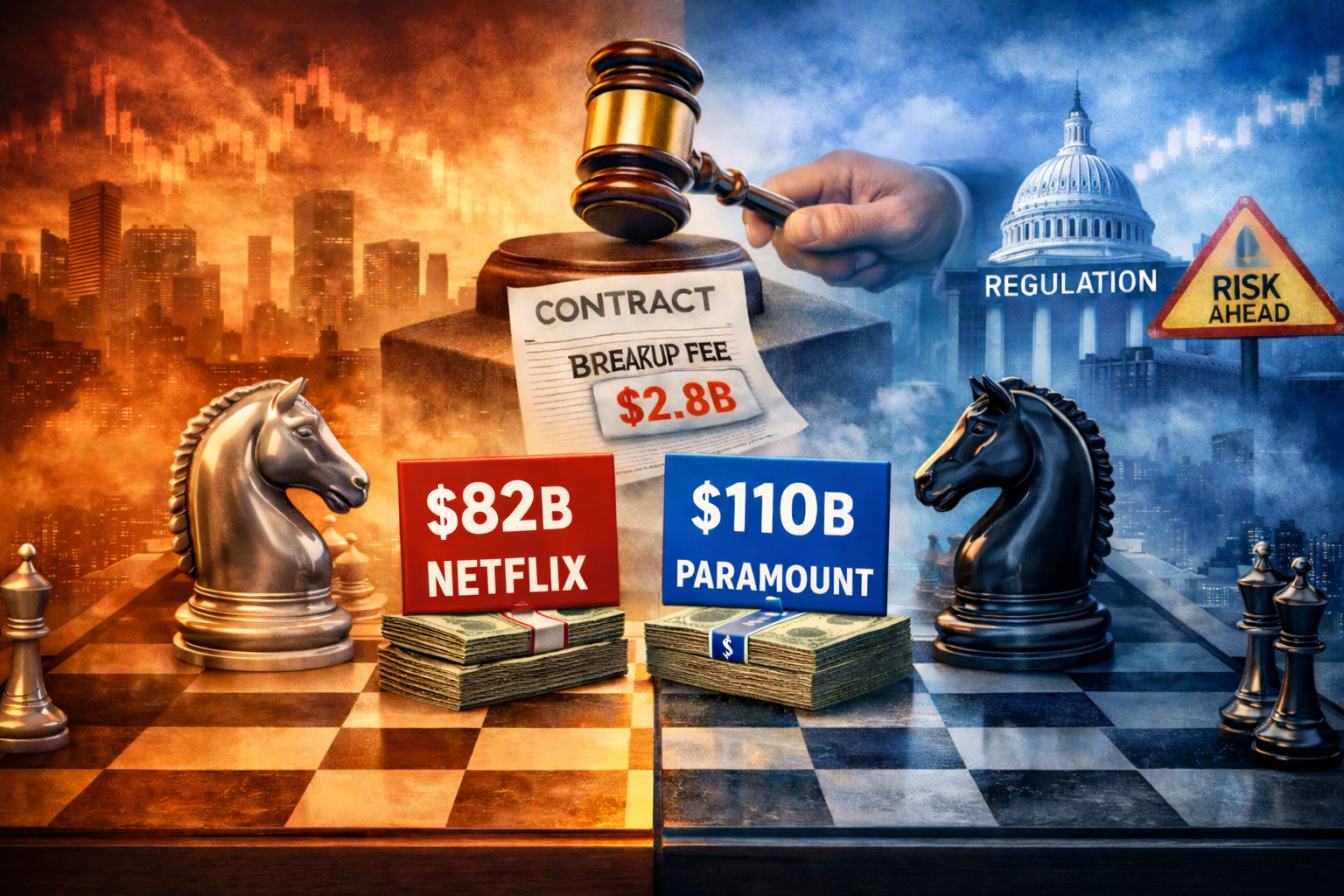
At first glance, Netflix should have won. Its bid for Warner Bros. Discovery made strategic sense. The fit was clear and the structure was clean. If you evaluated the deal on logic alone, it looked like the obvious choice.
But Paramount won. Not because it had the better strategic story – at least not initially – but because it changed what the decision was about.
1. When the Rules Change Mid-Game
Netflix approached the deal like many companies approach strategy – make the strongest, most rational offer and expect it to win.
Paramount played a different game. Instead of competing on fit, it competed on certainty:
- Covering breakup fees
- Absorbing regulatory risk
- Paying shareholders while approvals played out
They didn’t just improve their bid – they redefined the criteria. What started as a strategic decision became a risk decision. And that changed everything.
2. Why Most Strategies Break Down
This is where most companies get caught flat-footed. They build strategies as if the decision will be made based on the current state: what we offer, how strong it is, why it should win, etc.
But real-world decisions don’t stay static, they evolve, competitors respond, and stakeholders shift priorities. External forces (like regulation) enter the equation. The “best” strategy at the start rarely wins on its own.
3. The Missed Discipline: Playing the Game Forward

If you step back, the outcome wasn’t as surprising as it seemed. The signals were there:
- One player needed the deal badly and would keep escalating
- One player had alternatives and would walk away at the right price
- The buyer’s priorities could shift under pressure
Those dynamics don’t show up in a spreadsheet. They show up when you ask a different question: What happens after this move?
4. Where War-Gaming Changes the Outcome
This is exactly what structured war-gaming is designed to uncover. Not by predicting a single outcome, but by mapping how the situation is likely to evolve. When done well, it forces teams to:
- Step into competitor mindsets
- Model how different stakeholders actually make decisions
- Introduce “bombshells” like regulatory shifts
- Play multiple rounds of response and counter-response
In a situation like this, that means you’re not reacting when conditions change.
You’ve already seen them.
5. What This Deal Makes Clear
Two dynamics shaped the outcome more than anything else.
- The decision-makers weren’t aligned: Boards, shareholders, and leadership teams don’t value the same things. What looks like the best long-term strategic move to one group may matter less than short-term certainty to another. Paramount understood that and went directly after it.
- The competitors weren’t playing the same game: Netflix had options. It didn’t need to win at any cost. Paramount did. That difference in mindset made their behaviors predictable – one escalates & one walks away. If you understand that early, you don’t just react to competitors, you anticipate them.
6. The Advantage Most Companies Miss
In hindsight, many of the key moves were visible: escalating bids, a competitor exiting, and risk becoming the deciding factor. Even the final outcome, while not perfectly predictable, was directionally clear. And that’s the point. The goal isn’t to be right about every outcome. It’s to be ready for how the situation unfolds.
7. Why This Matters Beyond M&A
Most companies won’t be bidding on a media giant.
But they face the same dynamics every day:
- Product launches
- Competitive responses
- Pricing pressure
- Strategic partnerships
In each case, the risk isn’t making the wrong move. It’s making a move without understanding what happens next.
The Takeaway

Paramount didn’t just outbid Netflix – it outplayed the situation. Because in complex markets, advantage doesn’t go to the company with the best initial strategy. It goes to the one that has already played the game forward.
Related Posts
-
In this episode, the team looks back on 2025 through a strategic lens — not…
-

Some companies are paralyzed. Some are moving fast. But without a blueprint, even the best…
-
Get Out of the Gate Quickly By Adding War-Gaming To Your New Product Launch Strategy…